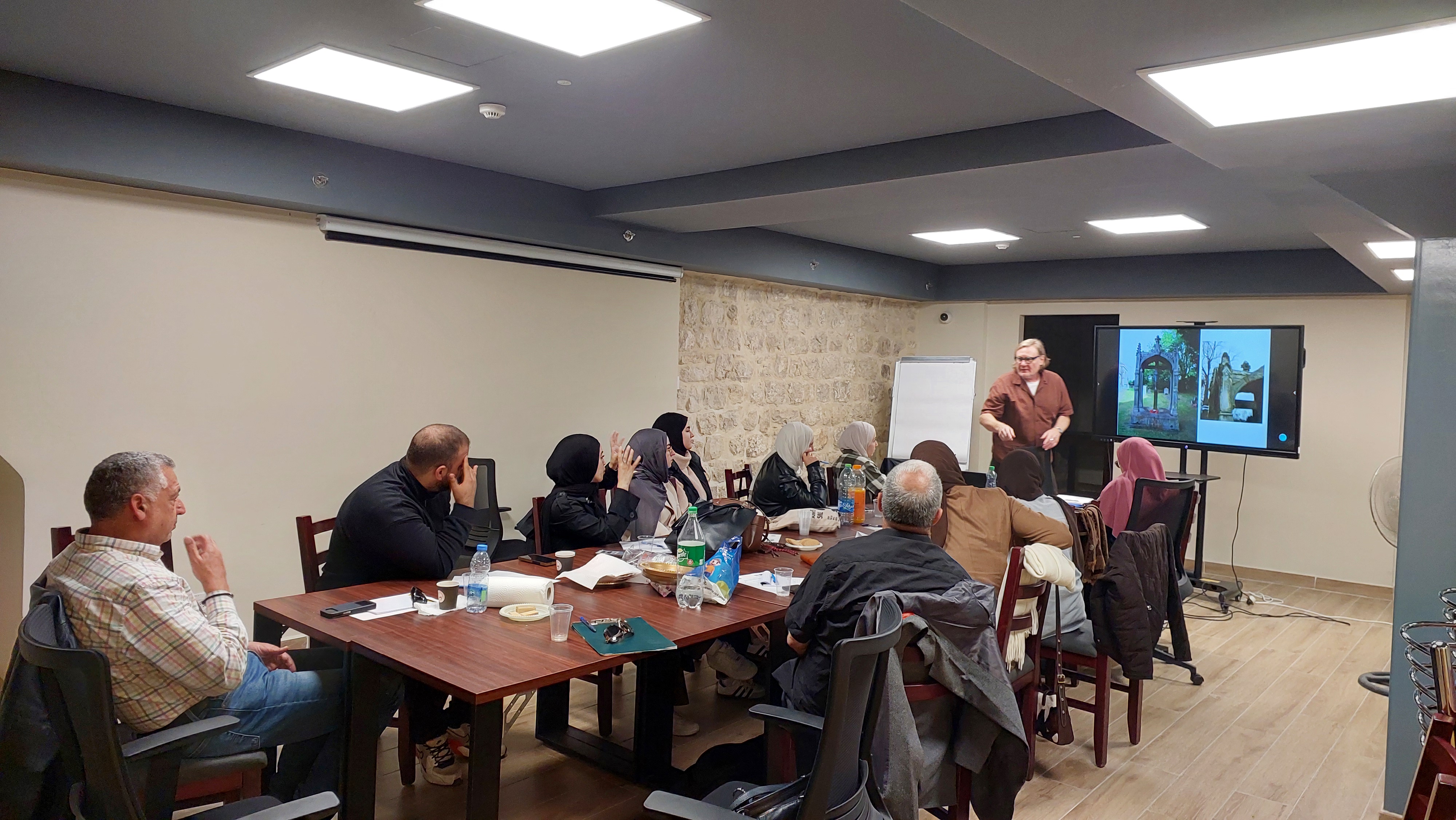
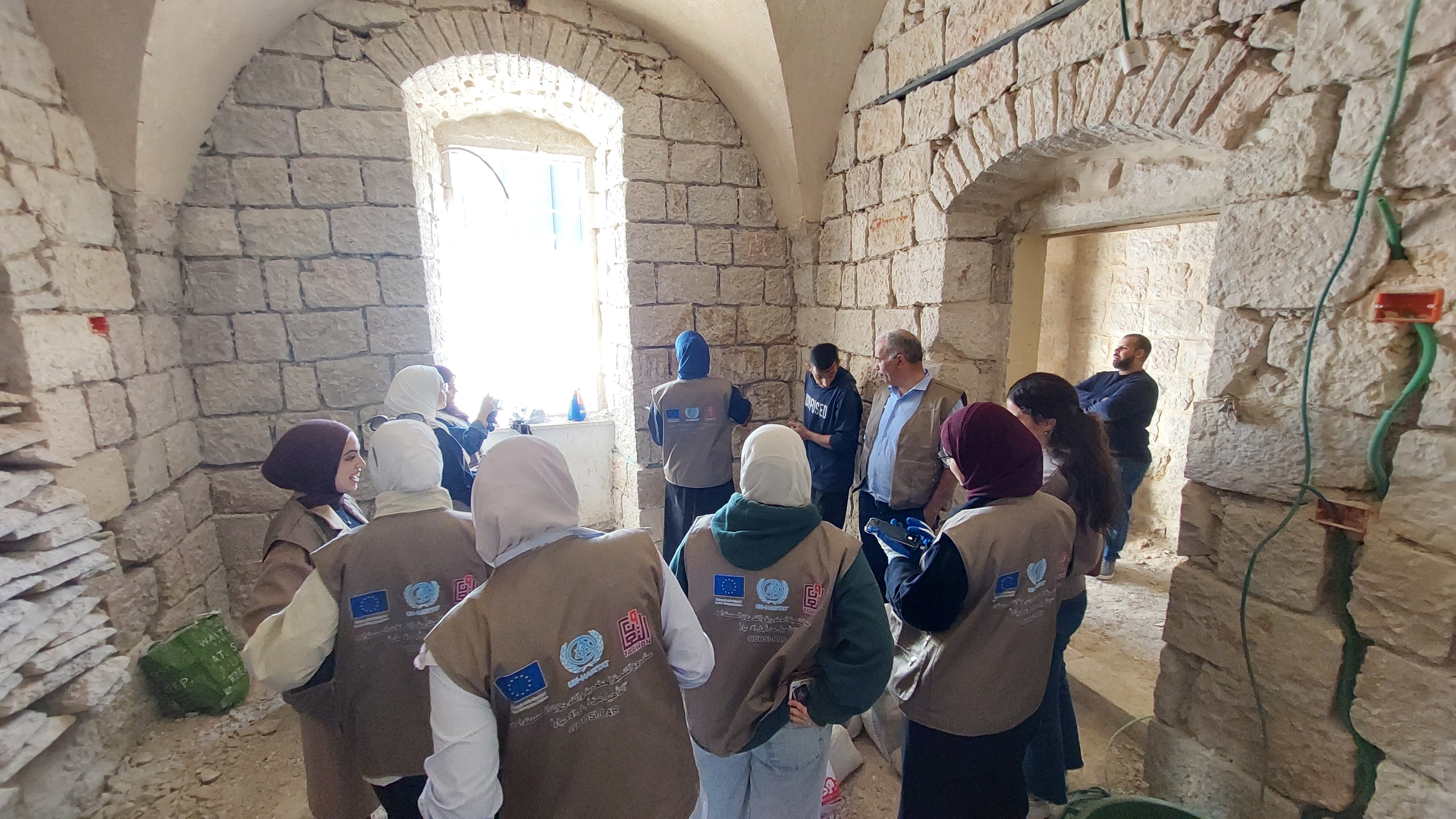
Old Cities Revitalization Program Al-Taawon (Welfare Association) Foundation successfully concluded a series of three specialized and intensive training courses in the field of architectural conservation and sustainable rehabilitation. These courses were held during November 2025 as part of the activities of the "Quality Urban Development and Sustainable Interventions - Rehabilitation for Revitalization" (QUDSI-R4R) project.
These courses contributed to building the capacities of Palestinian engineers and architects working in the field of cultural heritage and the conservation of historical urban environments.
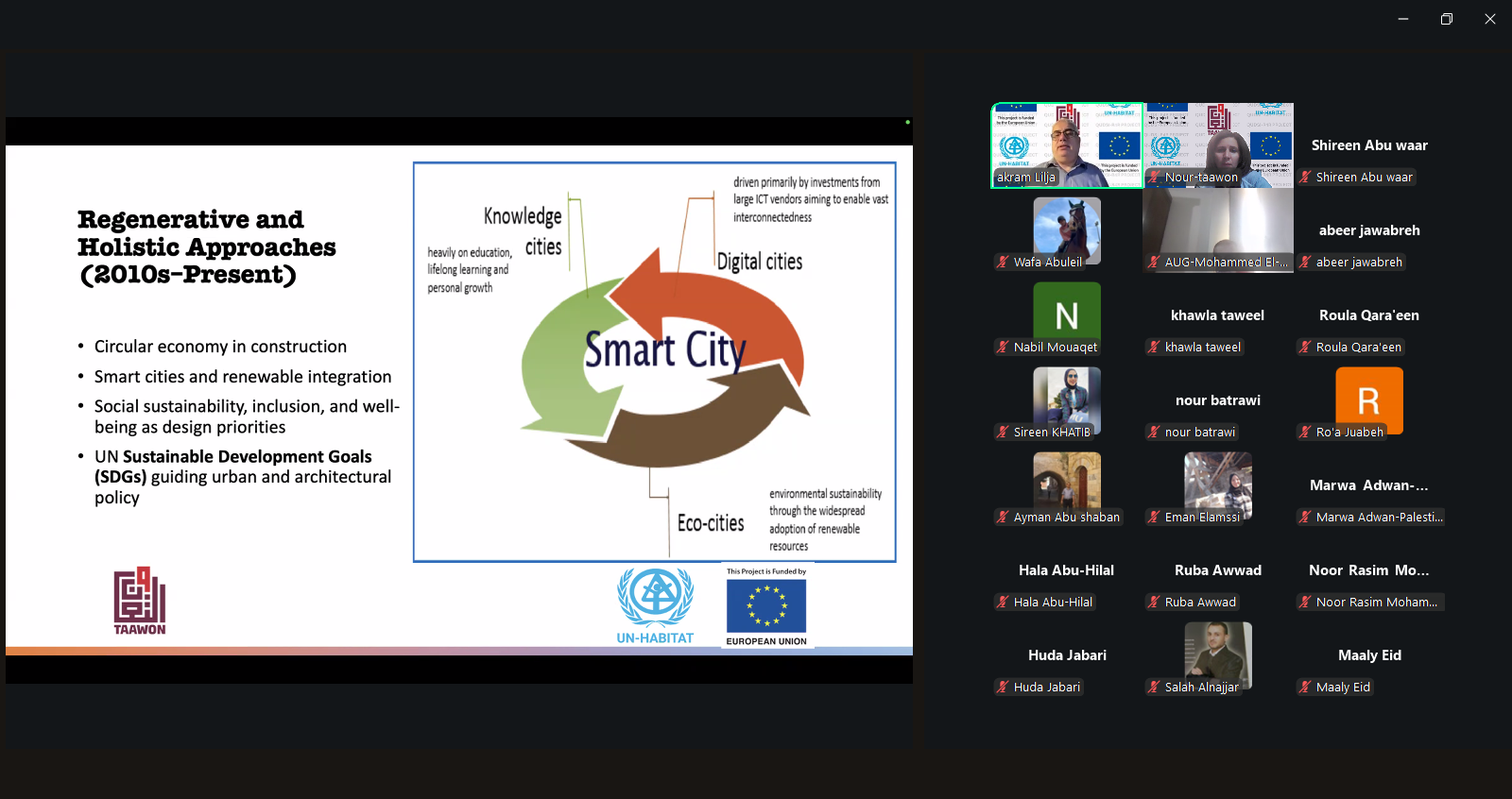
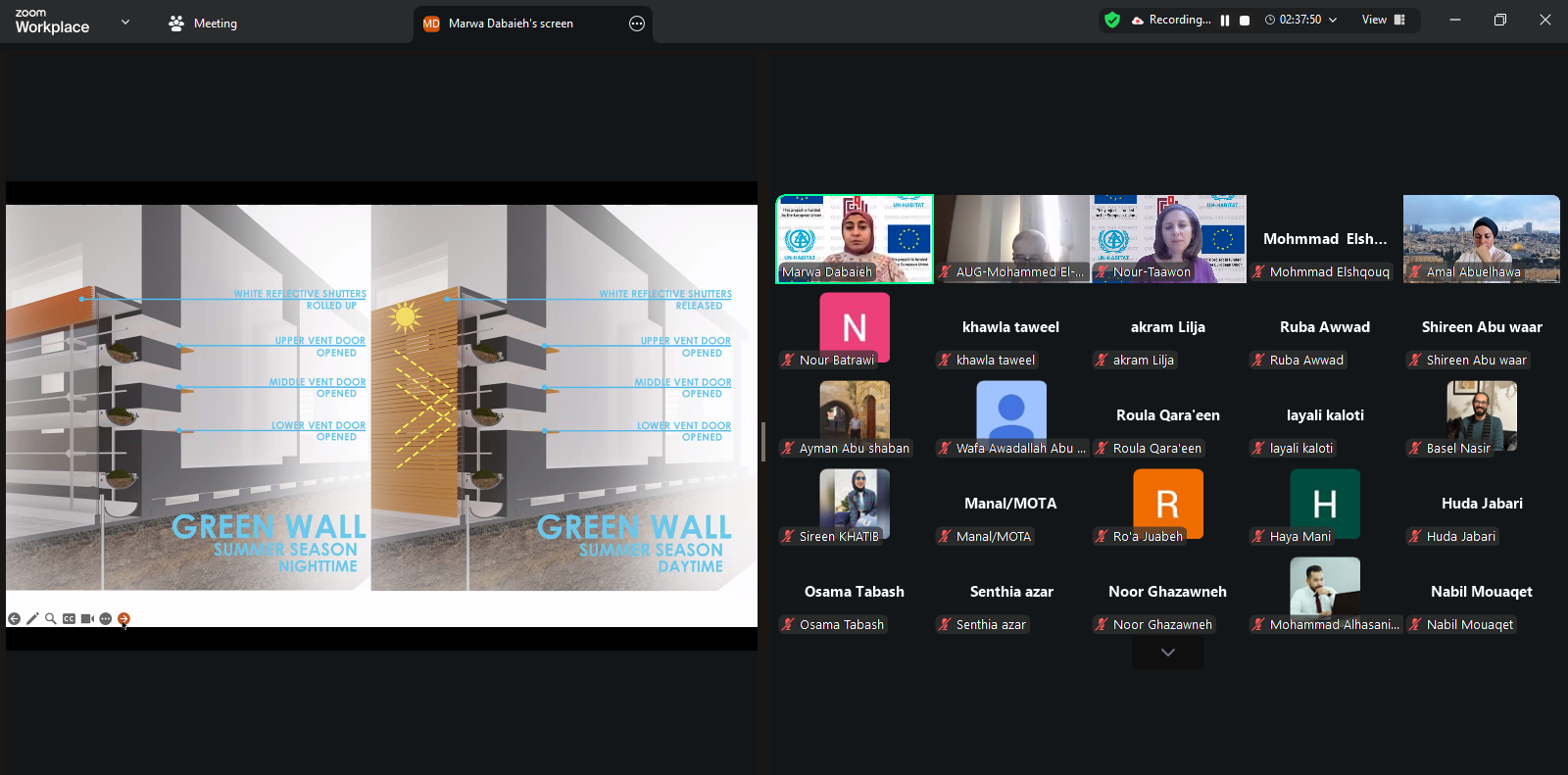
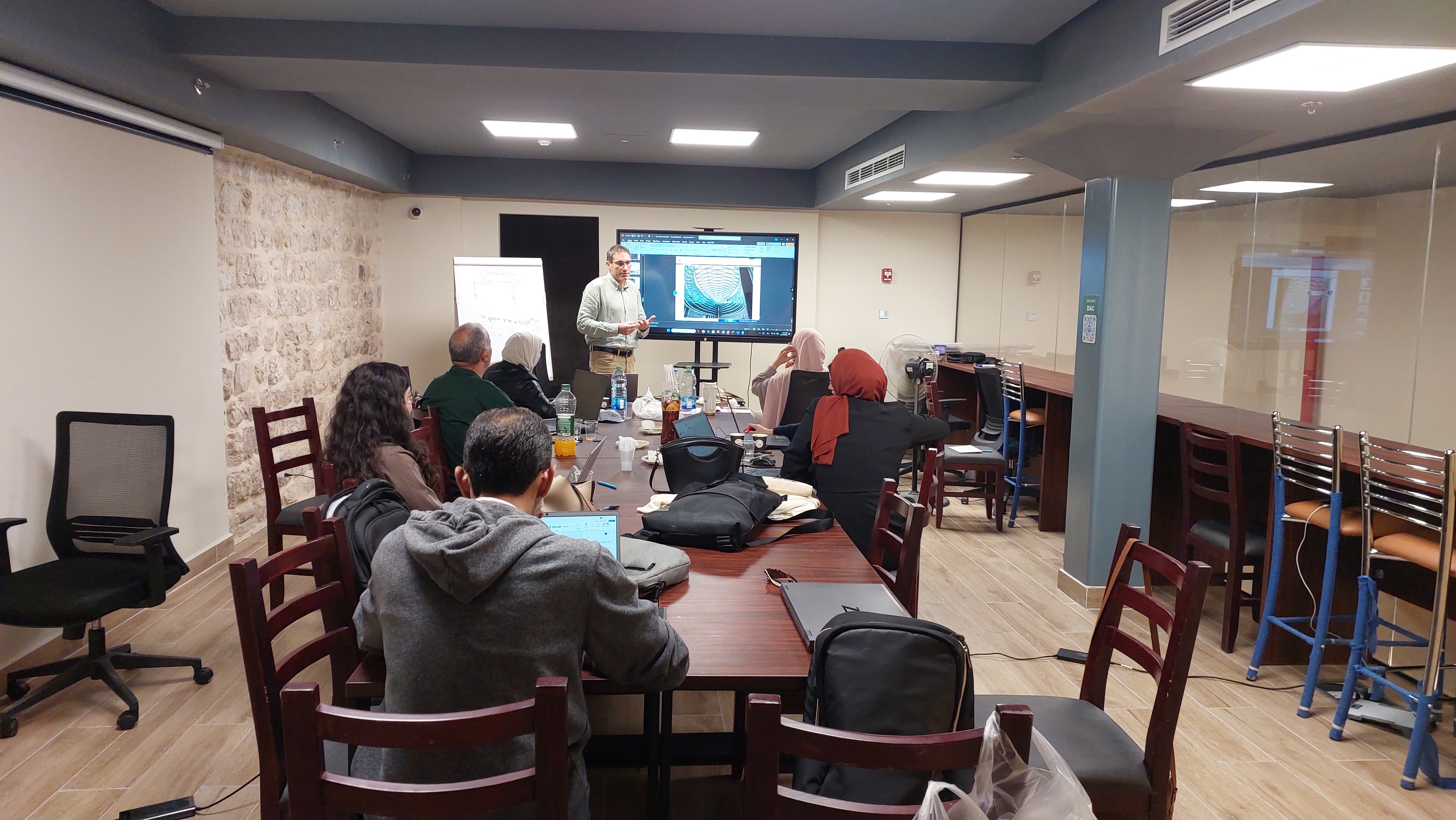
The series kicked off with the course "Environmentally Friendly Design and Materials for Cultural Heritage," which was held via the Zoom platform over 7 sessions from November 1st to 22nd. It aimed to deepen participants' understanding of sustainable architecture principles, featuring an elite group of local and international experts.
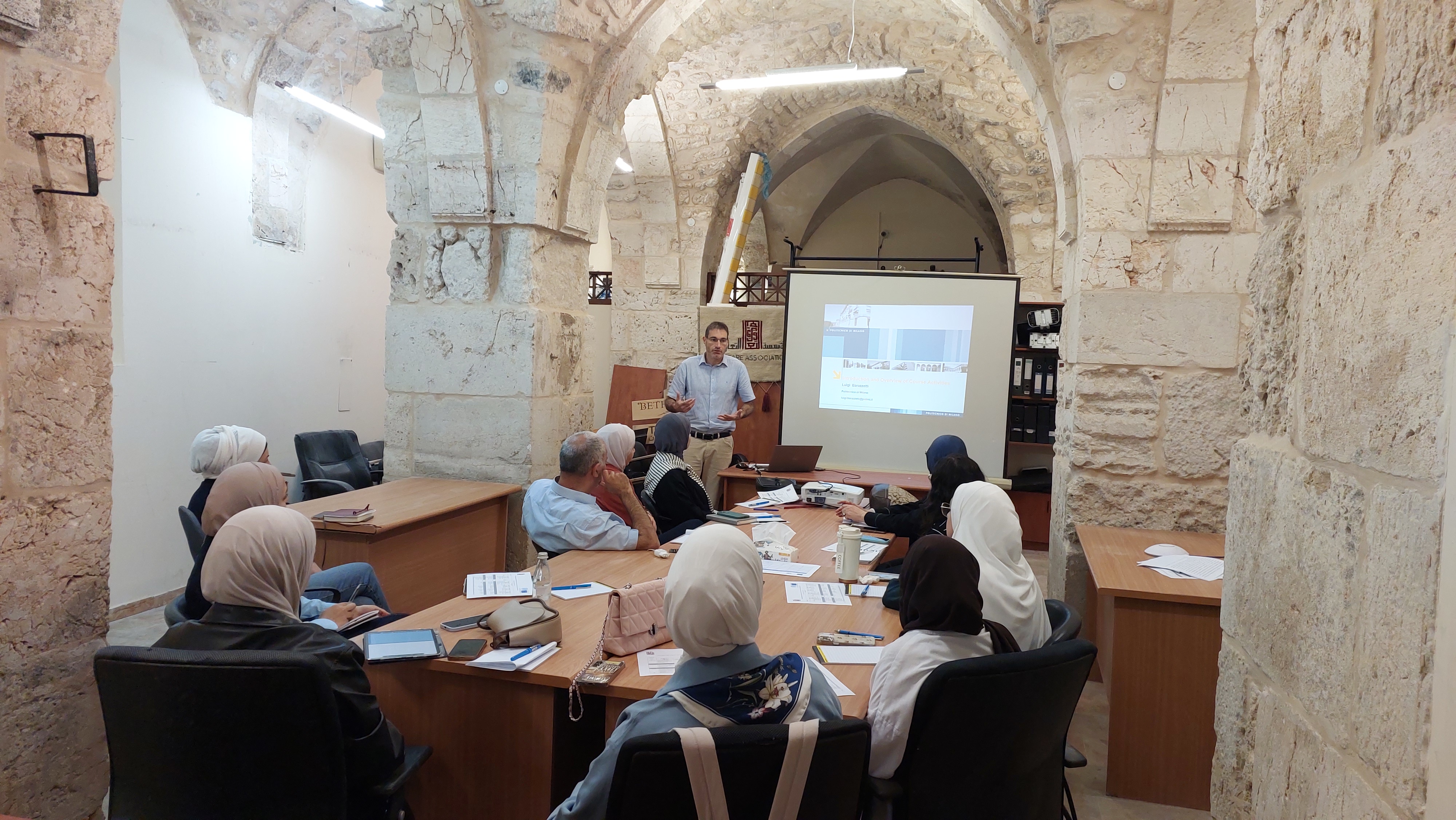
Following this, the second course, titled "From Digital Documentation to Artificial Intelligence," was presented by the international expert Dr. Luigi Brazzati from Italy in person in Jerusalem's Old City. Over 5 days, participants received advanced practical training on the latest 3D digital and laser scanning technologies, as well as artificial intelligence applications for monitoring and surveying historical buildings.
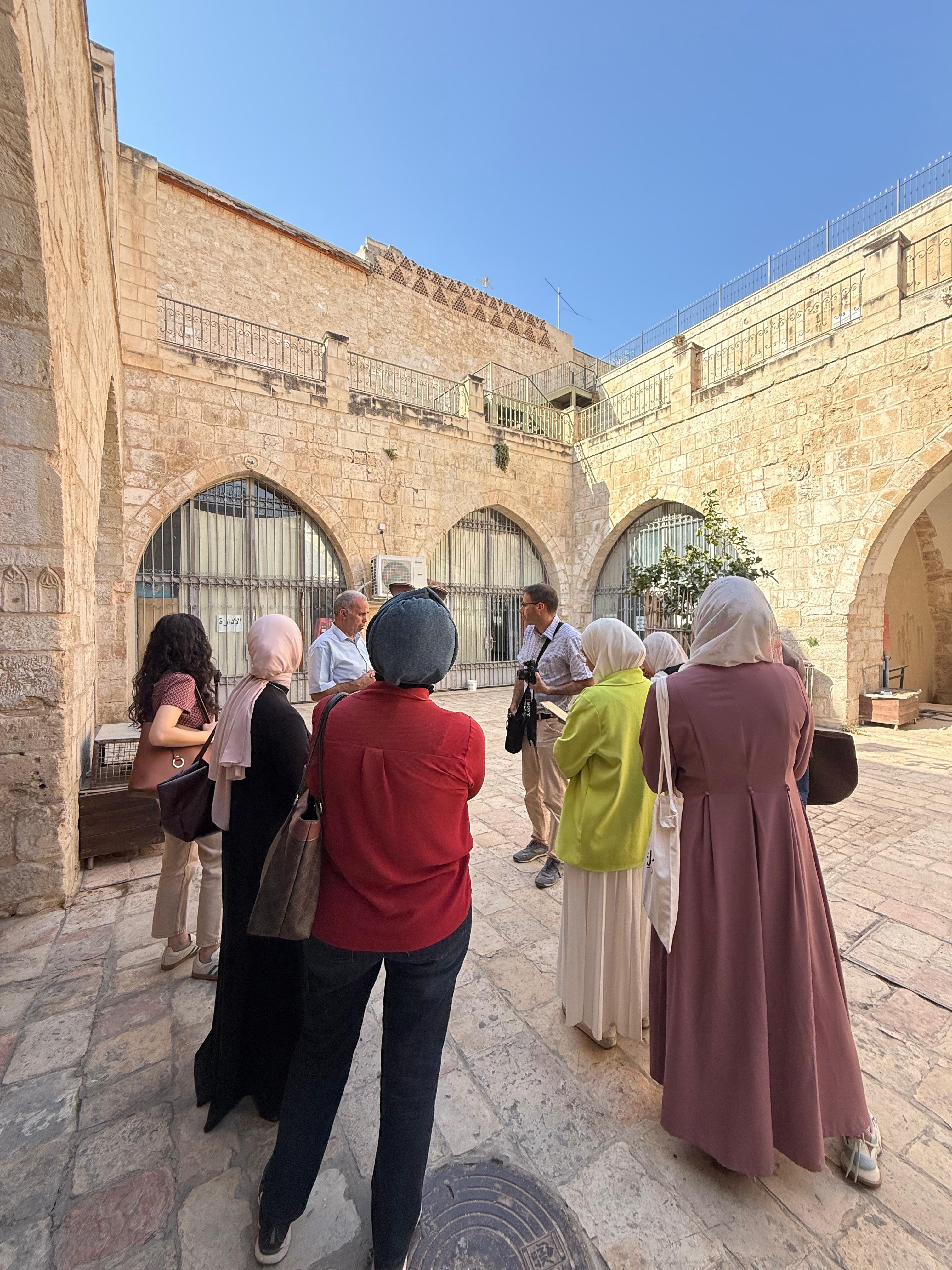
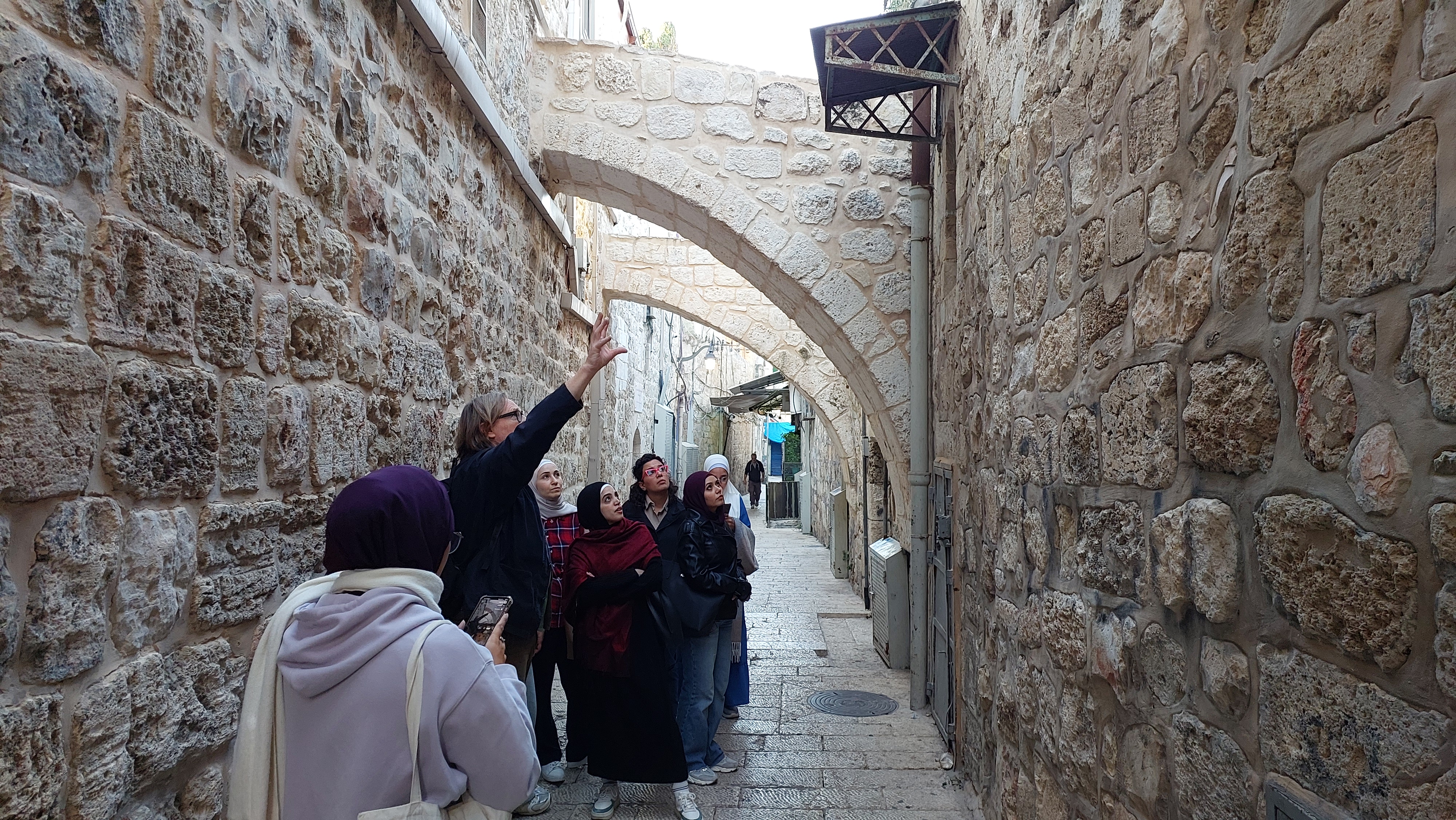
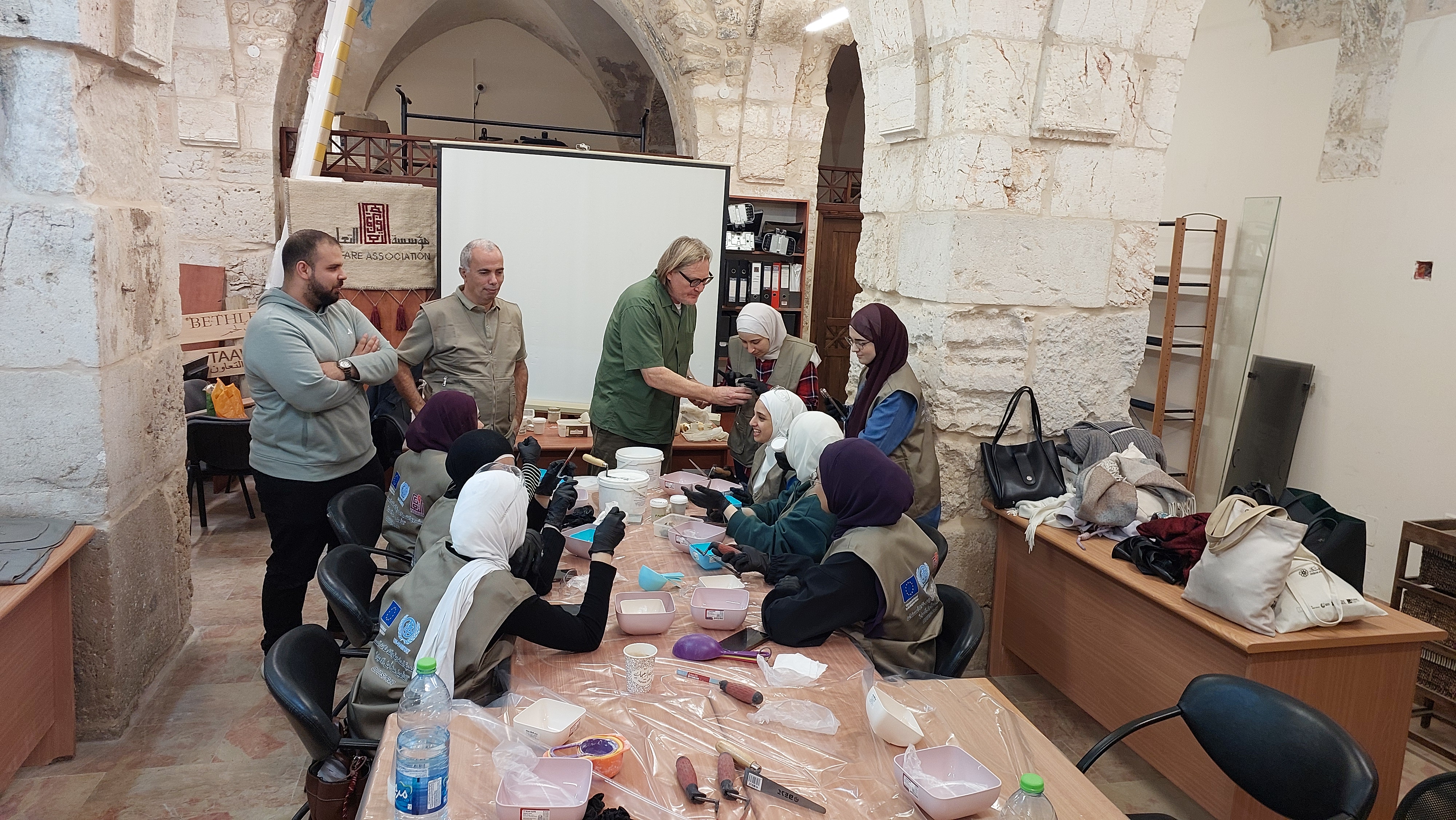
The series concluded with an intensive applied course on "Stone Conservation and Applications of Plastering and Whitewashing," led by the international expert Mr. Angus Lawrence. Here, participants transitioned from theory to practical field application within the Old City, learning techniques for preparing and applying lime mortar and conserving stone.
These courses were organized with support and funding from the European Union, under the management of the United Nations Human Settlements Programme (UN-Habitat), and implemented by Al-Taawon (Welfare Association). This initiative aims to enhance resilience and preserve the architectural identity of Jerusalem and other ancient towns in Palestine by qualifying local cadres capable of leading and conserving their built heritage.