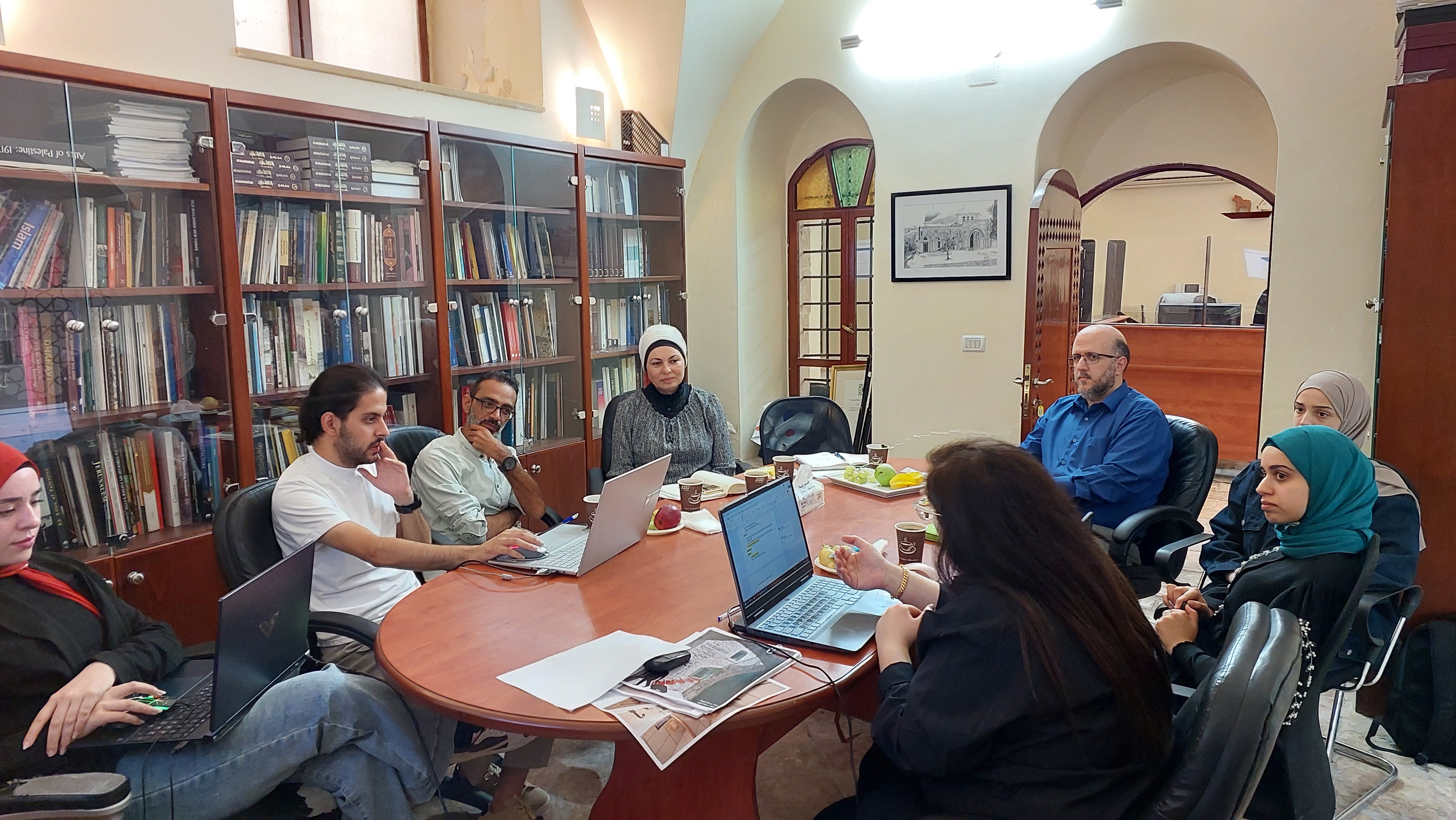
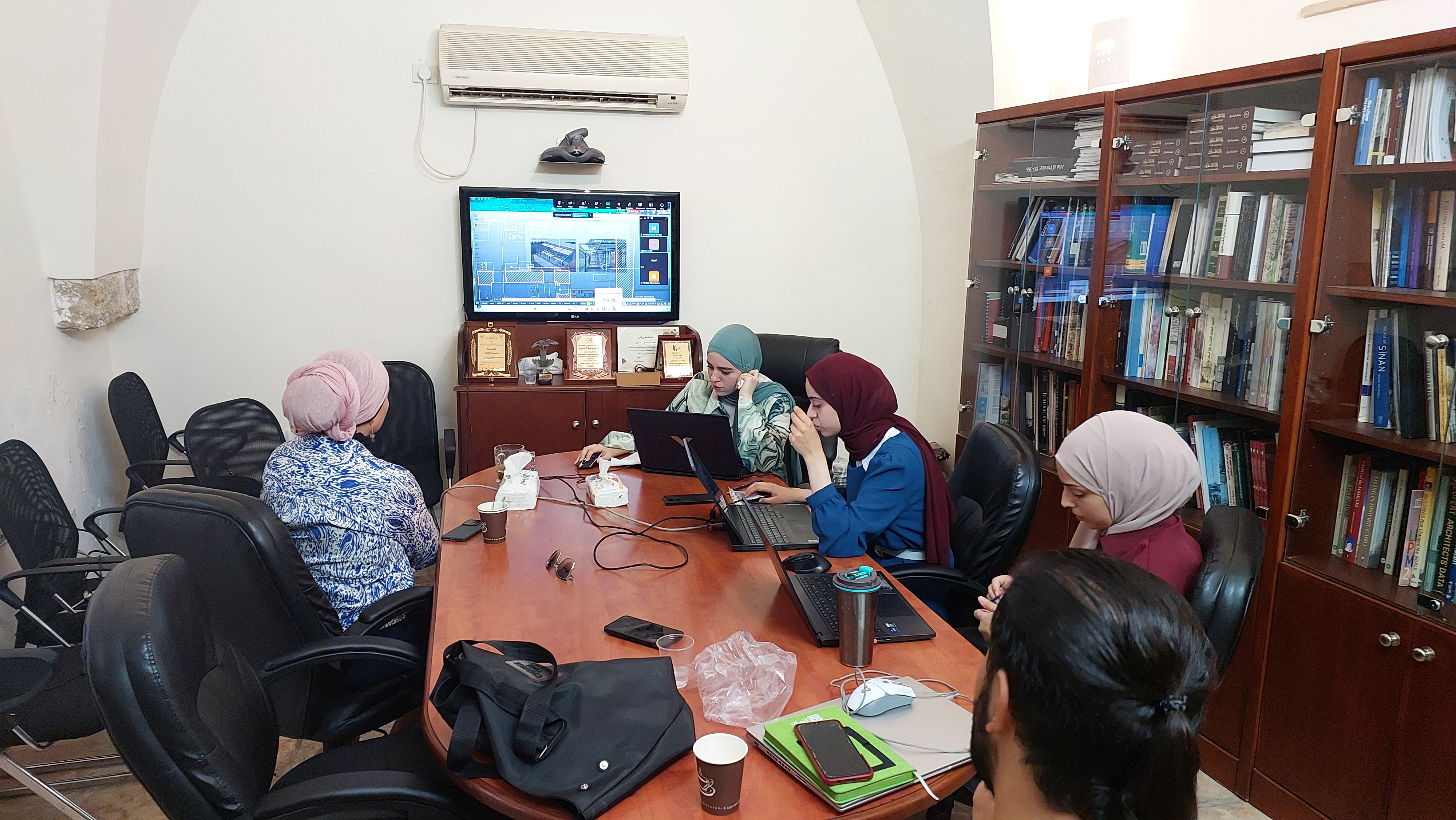
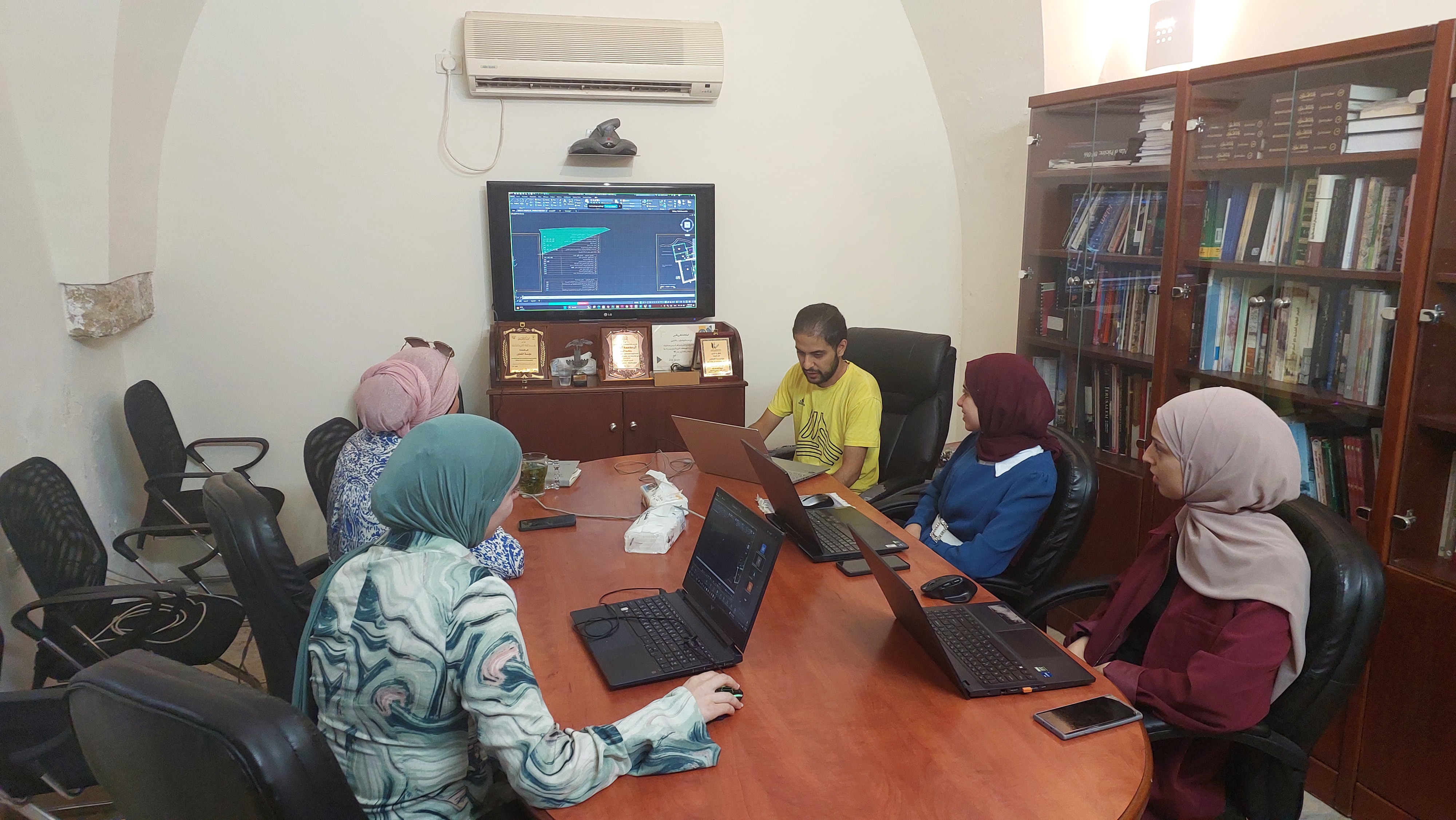
As part of efforts to enhance practical experience in the architectural heritage sector, an intensive on-the-job training program was implemented, aiming to equip students with the necessary skills in the field of restoration and preservation of historical buildings, and to work within an integrated professional environment.
Four students (three female students and one male student) from Birzeit University and Al-Quds University underwent on-the-job training within the framework of the project "Quality Urban Development and Sustainable Interventions - Rehabilitation for Revitalization" (QUDSI-R4R), funded by the European Union, managed by the United Nations Human Settlements Programme in the Arab Region (UN-Habitat), and partially implemented by the Old Cities Revitalization Program Al-Taawon (Welfare Association).
The training was practically focused on four projects to be restored under the Qudsi project, covering multiple areas, most notably architectural research and documentation. The program’s outputs included preparing a comprehensive set of drawings, encompassing: architectural survey drawings of the existing conditions, preparatory work plans, as well as project design drawings and architectural details. Students also worked on preparing a preliminary bill of quantities for the project and delivering a detailed report documenting field observations, needs, and proposed works.
The scope of the training extended to deepening knowledge in the principles of restoration and preservation of the historical environment, and familiarization with architectural and historical vocabulary and traditional construction materials. On the office side, the training included drafting and documentation tasks, and understanding the stages of preparing bills of quantities for restoration projects. As for field work, the students conducted topographic surveys, documented damages through photography, and coordinated with beneficiaries to ensure the implementation of proposed works.